The question
Who tests the tools designed for the people who need them most? Accessibility hardware is mostly built by able-bodied engineers, and the gap between how they think users interact and how users actually interact stays invisible.
What it does
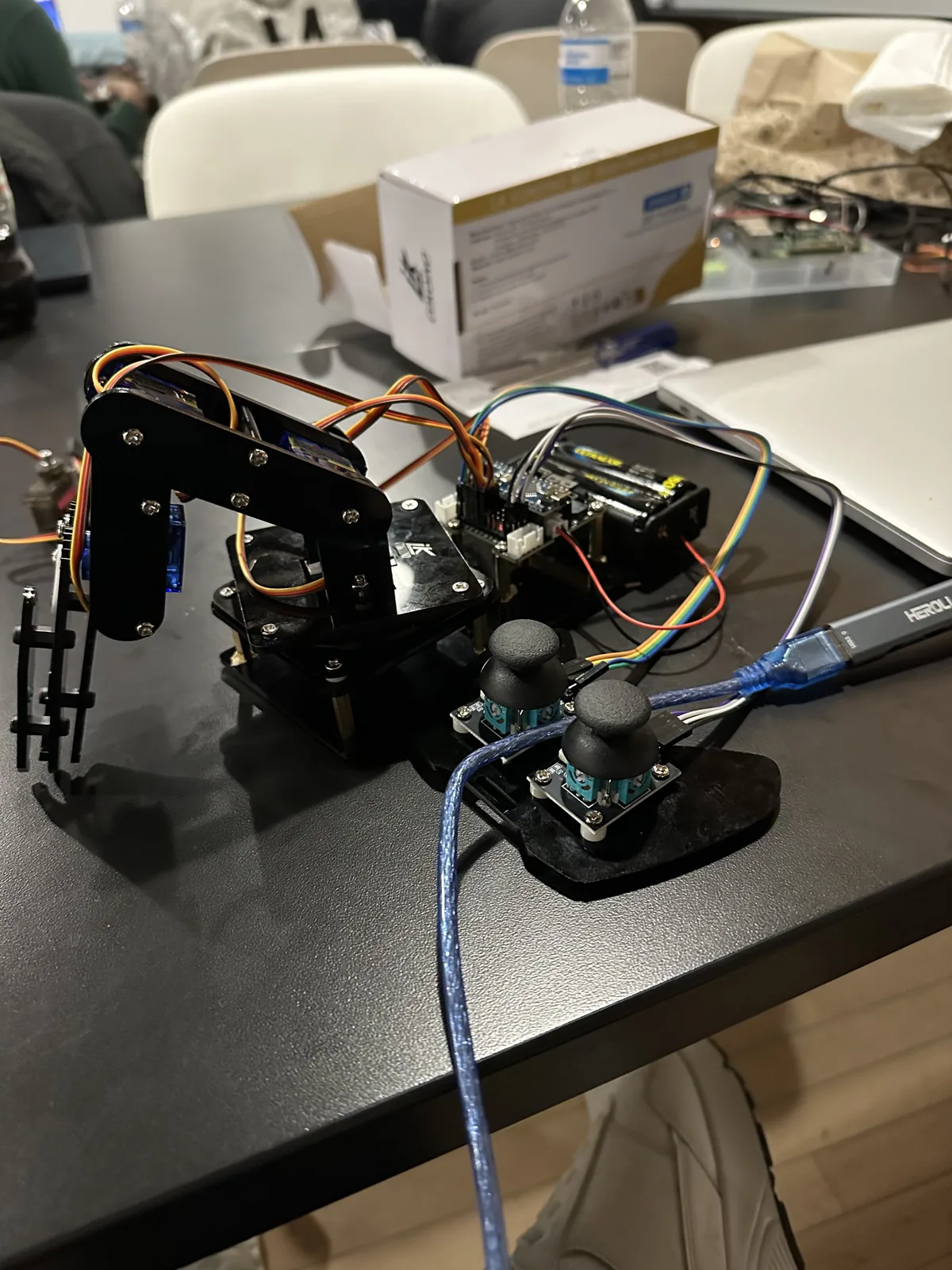
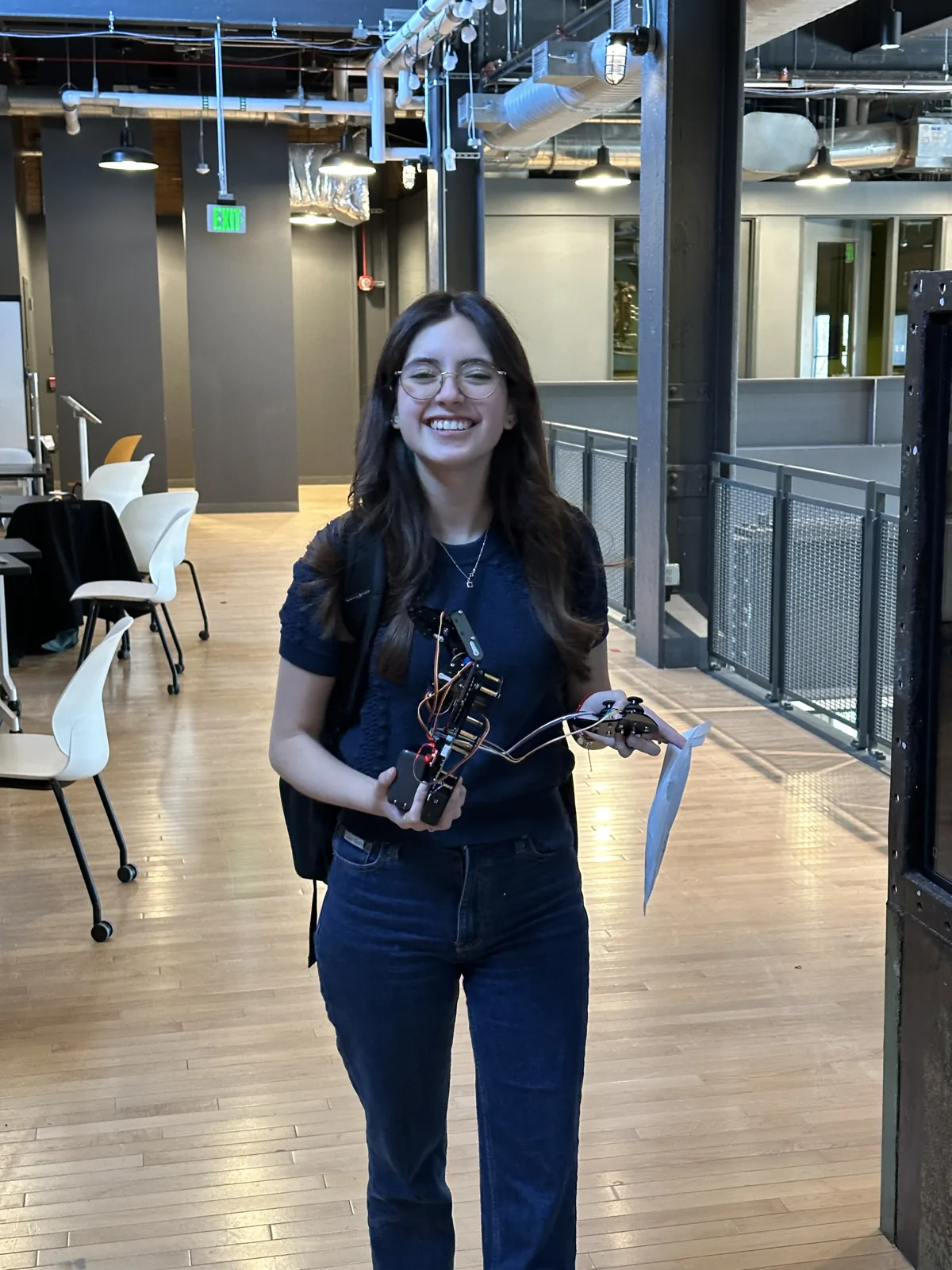
A four-servo arm physically drives joysticks and buttons while simulating limited mobility and fatigue, then compares the designed path with the actual one: the desire path, like worn grass showing where the sidewalk should have been. A live 3D twin of the arm overlays the divergence.
What we learned
Hardware–software integration is unforgiving: firmware math has to be mirrored exactly in the backend or the 3D twin drifts. And the best ideas come from asking who’s being left out, not what’s technically impressive.